Ankle Stabiliser Guide: Staying Grounded on the Australian Track
Ever had that split second of pure panic? One moment you’re hitting your stride on a crisp Melbourne morning or navigating a trail in the Blue Mountains, and the next, your ankle decides to take a detour it wasn’t designed for. That sickening “pop” or roll isn’t just a physical setback; it’s a mental one. For runners and weekend warriors across Australia, a lateral ligament sprain is often the “uninvited guest” that refuses to leave.
If you’ve ever found yourself icing a swollen joint while staring longingly at your running shoes, you know that recovery is a marathon, not a sprint. But what if you could put a safety net under every step?
Why the “Aussie Roll” is More Than a Nuisance
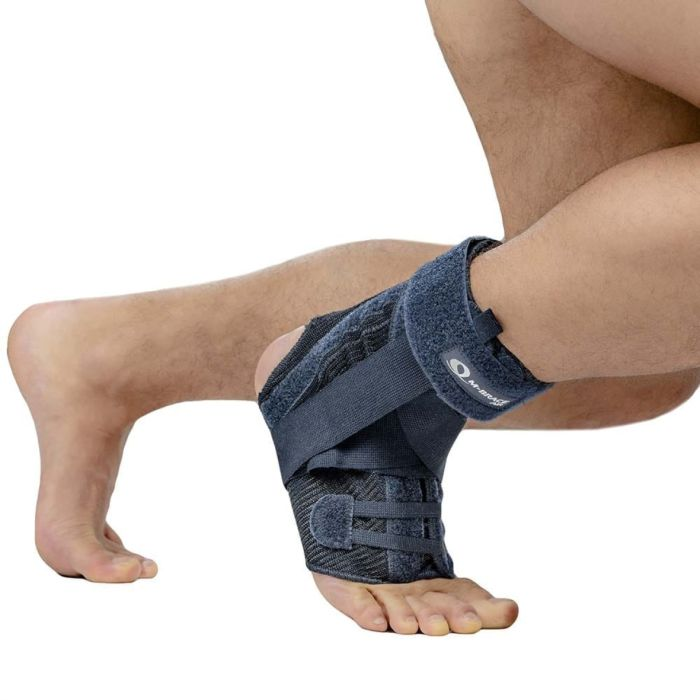
Our terrain is diverse, but it’s rarely flat. Whether it’s the uneven camber of a suburban footpath or the unpredictable roots of a bush track, our ankles do an incredible amount of heavy lifting. An Ankle Stabiliser acts as an external reinforcement, mimicking the natural function of your ligaments to prevent the joint from over-rotating.
It’s a common misconception that braces make your muscles “lazy.” In reality, a well-designed support provides proprioceptive feedback. This is a fancy way of saying it helps your brain stay in better communication with your foot, allowing you to react faster to a slip before it becomes a tear.
Choosing Your Support: Not All Braces Are Equal
Selecting the right gear depends on where you are in your journey. Are you trying to get back to the gym after a month off, or are you looking to prevent a recurring tweak?
| Activity Level | Recommended Support Type | Primary Benefit |
| High Impact (Rugby/Netball) | Rigid or Lace-up Stabiliser | Maximum lateral protection |
| Recovery & Walking | Compression Sleeve | Reduced swelling and warmth |
| Daily Management | Semi-Rigid Stirrup | Balanced comfort and stability |
For those dealing with broader structural issues, remember that the kinetic chain starts at the base. Sometimes, persistent ankle fatigue stems from poor arch support. Integrating orthotic insoles plantar fasciitis sufferers trust can often realign your gait, taking the unnecessary strain off the ankle joint itself.
Beyond the Ankle: The Full-Body Connection
Physical health is rarely isolated to one joint. We often see athletes who focus so much on their “trouble spot” that they neglect the rest of the engine room. For instance, if you’re recovering from a lower-body injury, your core and pelvic stability play a massive role in how you land.
Interestingly, we’ve assisted many active men who find that during intense rehabilitation or heavy lifting, they require specific core reinforcement, such as a testicular hernia support, to maintain total-body integrity while they regain their running fitness. It’s all about protecting the foundation.
When to Transition to a Walker Ankle Solution
Sometimes, a standard sleeve isn’t enough. If you’ve suffered a Grade 3 tear or a stress fracture, your GP might suggest a walker ankle boot. This isn’t a sign of defeat; it’s a tool for precision healing. It immobilises the joint entirely to allow tissue fibres to knit back together correctly, ensuring that when you do return to the pavement, you aren’t dealing with chronic instability.
Small Habits for Bulletproof Ankles
While an Ankle Stabiliser is your best friend on game day, don’t ignore the “homework.”
- The Toothbrush Balance: Try standing on one leg while brushing your teeth. It’s harder than it looks and works those tiny stabilising muscles.
- Check Your Tread: If your runners have done more than 600km, the foam has likely packed down, losing its ability to absorb shock.
- Warm-up, Don’t Just Stretch: Focus on dynamic movements like ankle circles and calf raises rather than just static pulling.
Moving Forward with Confidence
Injuries have a way of making us feel fragile, but the human body is remarkably resilient when given the right tools. Whether you are navigating the recovery phase or just want the confidence to push for a new PB on your local Parkrun, protecting your ankles is an investment in your future mobility.
Don’t let the fear of a “roll” keep you on the sidelines. Support the joint, trust your training, and get back out there.
FAQs
1. How tight should my stabiliser be?
Ans. It should feel like a firm hug, not a tourniquet. If your toes feel cold or you notice tingling, it’s too tight. You want restricted side-to-side movement, but you should still be able to flex your foot up and down.
2. Can I wear a brace every day?
Ans. While you can, it’s usually best to use it during “high-risk” activities or during an active flare-up. Complement your brace with strengthening exercises so your muscles stay engaged.
3. Is there a difference between a sleeve and a stabiliser?
Ans. Yes. A sleeve is primarily for compression and warmth (great for minor aches). A stabiliser features straps or “stays” (plastic or metal inserts) specifically designed to stop the ankle from rolling.
4. Will a brace fit inside my normal shoes?
Ans. Most modern, low-profile stabilisers are designed to fit into standard athletic shoes. You might just need to loosen the laces slightly more than usual.
5. How do I know if my sprain needs a doctor?
Ans. If you cannot put any weight on the foot immediately after the injury, or if there is significant bony tenderness, it’s time to head to the clinic for an X-ray.