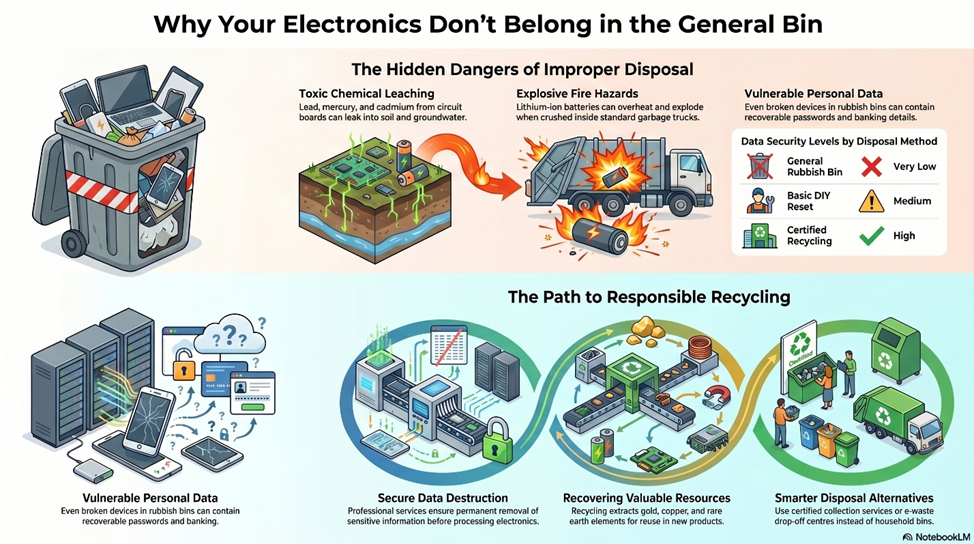
Why You Should Never Put Electronics in Your General Rubbish Bin
Throwing old electronics in the general rubbish bin might seem like the easiest option, but it’s one of the worst choices you can make for the environment, your safety, and your personal data. In Australia, electronic waste is one of the fastest-growing waste streams, and improper disposal creates serious long-term problems.
For safe and responsible handling of unwanted devices, services like secure electronics recycling and collection solutions, such as professional e-waste disposal services, ensure your items are processed correctly instead of ending up in a landfill.
What Counts as Electronic Waste?
Electronic waste (e-waste) includes any device with a plug, battery, or circuit board.
Common examples:
- Mobile phones and tablets
- Laptops and desktop computers
- TVs and monitors
- Printers and scanners
- Batteries and chargers
- Smart devices and accessories
Even small gadgets like headphones or USB drives count.
1. Harmful Materials Inside Electronics
Electronics contain toxic substances that become dangerous when dumped in a landfill.
| Material | Found in | Risk |
| Lead | Circuit boards, screens | Nervous system damage |
| Mercury | Displays | Environmental poisoning |
| Cadmium | Batteries | Kidney damage |
| Lithium | Rechargeable batteries | Fire hazard |
| Flame retardants | Plastic parts | Toxic emissions when burned |
These substances can leak into soil and water over time.
2. Long-Term Environmental Damage
Unlike organic waste, electronics don’t break down safely.
Environmental impacts:
- Soil contamination
- Groundwater pollution
- Harm to wildlife
- Permanent landfill accumulation
E-waste continues to affect ecosystems for decades.
3. Fire Risks from Batteries
Lithium-ion batteries are especially dangerous in general waste systems.
They can:
- Be crushed in garbage trucks
- Overheat and explode
- Cause landfill or facility fires
This is a major safety issue for waste workers and councils across Australia.
4. Hidden Data Security Risks
Even broken electronics may still contain recoverable data.
Risky data includes:
- Photos and videos
- Emails and messages
- Saved passwords
- Banking details
| Disposal Method | Security Level |
| General rubbish bin | ❌ Very low |
| Basic DIY reset | ⚠️ Medium |
| Certified recycling | ✔ High |
Proper recycling includes secure data destruction processes.
5. Valuable Materials Are Wasted
Electronics contain recoverable resources such as:
- Gold
- Copper
- Aluminium
- Rare earth elements
Throwing them away wastes valuable materials and increases the need for mining.
What Happens When E-Waste Is Recycled Properly?
| Step | Process |
| Collection | Devices are safely gathered |
| Sorting | Items separated by type |
| Data wiping | Secure removal of personal data |
| Dismantling | Devices taken apart |
| Recovery | Materials reused and recycled |
Why General Bin Is Not the Answer
Putting electronics in your rubbish bin leads to:
- Increased landfill pollution
- Higher fire risk
- Loss of reusable materials
- Potential data exposure
- Environmental damage
It’s a short-term solution with long-term consequences.
Smarter Alternatives in Australia
Instead of binning electronics, you can:
- Use certified recycling services
- Drop off at e-waste centres
- Arrange collection pickups
- Donate working devices
These options are safer and more sustainable.
Final Thoughts
Electronics should never be thrown into the general waste. They contain hazardous materials, valuable components, and sensitive data that require proper handling. Choosing responsible disposal protects both the environment and your personal security.
For residents and businesses looking for practical solutions, modern waste management services make recycling easy, compliant, and environmentally friendly.
You can also learn more about sustainable waste practices at RubbishGO Australia’s homepage.