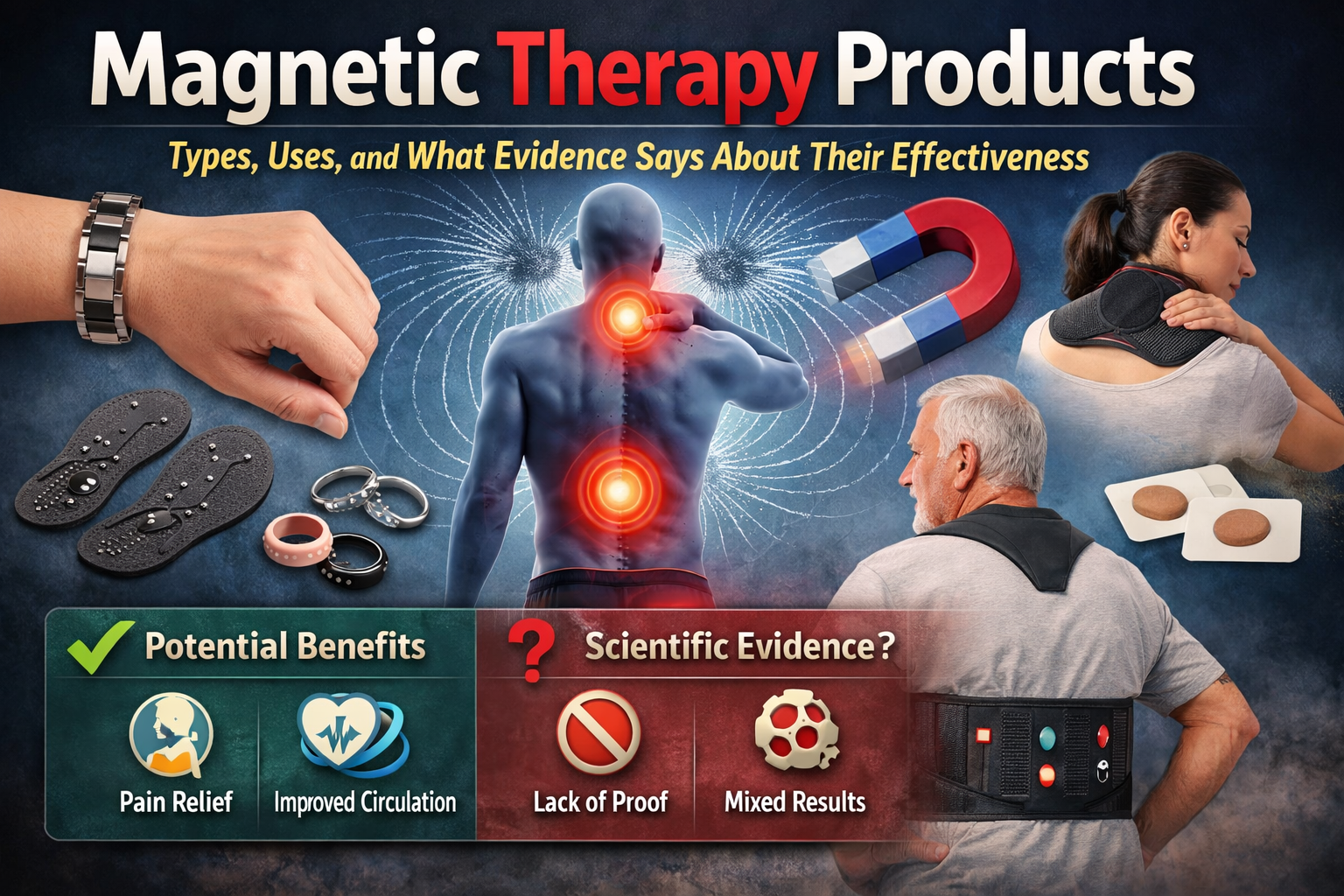
Magnetic Therapy Products: Types, Uses, and What Evidence Says About Their Effectiveness
The first thing most people notice about chronic pain isn’t the intensity. It’s the persistence. That dull ache that lingers while you make tea, the stiffness that greets you before your morning stretch. It becomes part of the background… until you decide it shouldn’t be. That’s often the moment people start exploring magnetic therapy products. Not out of desperation, but curiosity. What if relief didn’t have to come in a bottle?
So, What Exactly Are Magnetic Therapy Products?
Think of them as quiet helpers. These products use small, strategically placed magnets designed to sit close to your body. The theory is that they may influence blood flow and help reduce discomfort in specific areas. No heat, vibration. No fuss. Just a steady presence, working in the background while life carries on.
Types of Magnetic Therapy Products You’ll Actually Use
Not all products feel the same in daily life. Some become part of your routine without you even noticing.
Magnetic Bracelets
Simple, wearable, almost forgettable. Many people slip one on and carry on with their day, hoping for subtle joint relief.
Magnetic Back Supports
A favourite for desk workers and those who lift, bend, and repeat. It’s like giving your lower back a quiet layer of support during long hours.
Magnetic Bedding
This one surprises people. You go to sleep as usual, but over time, mornings feel a little less stiff. Not dramatic. Just… easier.
Magnetic Knee and Shoulder Supports
Perfect for joints that complain the loudest. Gardeners, walkers, and weekend cricketers tend to appreciate these the most.
Magnetic Insoles
If your feet take the brunt of your day, these can feel like a small upgrade that pays off by evening.
Where They Fit Into Real Life
Here’s the part people love. There’s no “therapy time”.
You wear a bracelet while replying to emails.
Use a back support while driving.
You sleep on magnetic bedding without changing a thing.
It doesn’t demand your attention. It simply joins your routine. And for someone already managing discomfort, that simplicity feels like a relief in itself.
What Does Science Say… Really?
Now, let’s keep this grounded. Research into magnetic therapy shows mixed outcomes. Some small studies suggest mild improvements in pain, especially in conditions like osteoarthritis. Participants in certain trials reported reduced discomfort compared to placebo groups.
On the other hand, broader scientific reviews often say the evidence is not strong enough to draw firm conclusions. So where does that leave you?
Somewhere honest:
- It may offer relief, especially for mild to moderate pain
- Results are not guaranteed
- It works best as a complementary approach
Interestingly, many users report feeling better even when research stays cautious. Pain is personal, after all. What shifts the needle for one person may not for another.
Why People Still Turn to Magnetic Therapy
Because it offers something rare in pain management.
Gentleness.
No chemicals.
Invasive steps.
No complicated instructions. For many, it’s not about chasing a cure. It’s about finding something that feels manageable, sustainable, and kind to the body. And sometimes, that’s enough.
A Thought Worth Sitting With
Relief doesn’t always arrive loudly. Sometimes it’s subtle. A slightly easier morning. A walk that feels less tiring. A shoulder that doesn’t interrupt your sleep as often. Magnetic therapy products live in that space. Not dramatic. Not instant. But quietly supportive.
Final Words
If you’re weighing your options, this is one of the simplest paths to explore. No pressure to commit long term. No complicated learning curve. Just something you try, observe, and decide. Because when your body has been asking for a bit of kindness, even a small shift can feel like progress.
FAQs
1. Do magnetic therapy products actually reduce pain?
Ans. Some people experience noticeable relief, especially with consistent use. Scientific evidence is mixed, but user experiences are often positive.
2. Are they safe for everyday use?
Ans. Yes, for most people. However, those with pacemakers or implanted medical devices should avoid them unless advised by a doctor.
3. How quickly do they work?
Ans. It varies. Some notice changes within days, others may take a few weeks of regular use.
4. Can I wear them all day?
Ans. Most products are designed for extended wear, including overnight use, depending on comfort.
5. What’s the easiest product to start with?
Ans. A magnetic bracelet or back support is usually the most convenient starting point for beginners.